
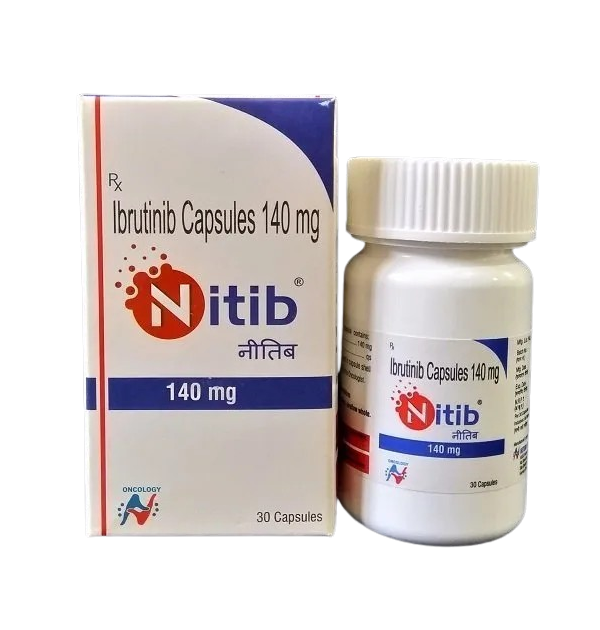


brutinib 140 mg Capsules – Advanced Oral Treatment for Blood Cancer
🔹What is Ibrutinib 140 mg?
Ibrutinib 140 mg is an oral targeted therapy used to treat various blood cancers. It is classified as a Bruton’s tyrosine kinase (BTK) inhibitor, and works by blocking signals that help cancer cells grow and survive.
Ibrutinib is approved for the treatment of multiple B-cell malignancies and is often prescribed as a long-term daily medication for managing cancer progression.
🔹Approved Medical Uses
| Cancer Type / Condition | Usage |
| Chronic Lymphocytic Leukemia (CLL) | Frontline or relapsed/refractory treatment |
| Small Lymphocytic Lymphoma (SLL) | Similar to CLL |
| Mantle Cell Lymphoma (MCL) | For relapsed/refractory cases |
| Waldenström’s Macroglobulinemia (WM) | Effective as monotherapy or in combination |
| Marginal Zone Lymphoma (MZL) | For relapsed cases after specific therapies |
| Chronic Graft-Versus-Host Disease (cGVHD) | Used when steroids fail in transplant patients |
🔹Mechanism of Action
Ibrutinib irreversibly binds to and inhibits the BTK enzyme, a critical component of B-cell receptor signaling. By blocking this pathway, it:
- Prevents cancer cell proliferation
- Induces apoptosis (cell death) in malignant B cells
- Inhibits tumor cell migration and adhesion
🔹Dosage & Administration
| Standard Adult Dosage | Condition Specific |
| Typically 420 mg once daily | CLL, SLL, WM |
| 560 mg once daily | MCL, MZL |
| 140–420 mg daily | Chronic GVHD, depending on patient response |
| 140 mg Capsule | Often taken in multiples (e.g., 3×140 mg = 420 mg dose) |
- Route: Oral, taken once daily
- Swallow whole: Do not crush, chew, or open capsules
📌 Dosage may vary based on other medications, kidney/liver function, and doctor guidance.
🔹Common Side Effects
| Frequent | Serious |
| Diarrhea | Bleeding (including brain hemorrhage) |
| Fatigue | Irregular heart rhythm (atrial fibrillation) |
| Nausea | Infections (respiratory, urinary, etc.) |
| Rash or bruising | High blood pressure (hypertension) |
| Muscle/joint pain | Secondary cancers (rare) |
🔹Warnings & Precautions
- Cardiac Risk: Can cause irregular heart rhythm; monitor ECG in high-risk patients
- Infection Risk: Increased risk of bacterial, fungal, and viral infections
- Liver Impairment: Dose adjustments may be needed
🔹Contraindications
- Known hypersensitivity to Ibrutinib
- Severe liver disease (dose modification required)
- Caution with pre-existing heart arrhythmias
🔹Storage Instructions
- Store at room temperature (20–25°C / 68–77°F)
- Protect from light and moisture
- Keep in original packaging
- Keep out of reach of children and pets


Reviews
There are no reviews yet.